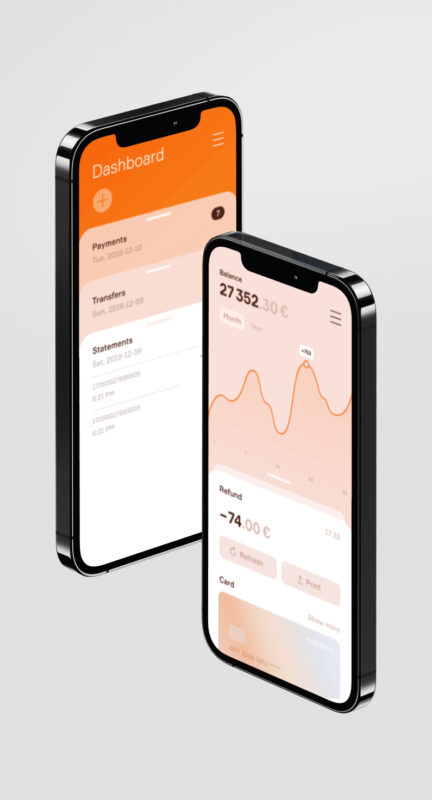
Custom MCP Server for Agent-Ready Fintech API Integration
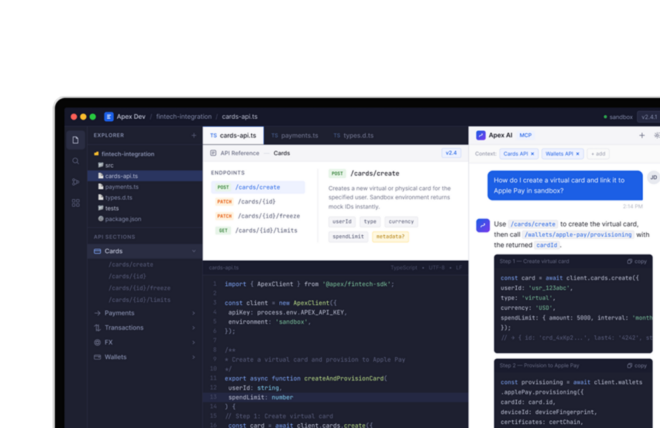
An MCP server built on top of a banking-infrastructure platform, exposing its APIs and documentation to Claude, Cursor and other AI tools so client developers can integrate without going through support. Around 42% fewer support tickets, with no changes to the underlying APIs.
• Custom MCP Server Development
• 2026
• Industry: FinTech
Initial Task
Description
The сlient is a banking-infrastructure company providing card issuance, payments, FX and Apple Pay / Google Pay. Banks, neobanks and fintech startups build their own products on top of its APIs, so how quickly their developers can integrate shapes the platform’s growth.
As the client base grew, those developers kept hitting the same integration questions: which endpoints to use, in what order, how to handle edge cases. The documentation answered all of it, but it sat outside the AI tools developers actually work in, so every question landed in the support queue.
The сlient approached Touchlane to make the platform usable directly inside those tools, under two constraints: no changes to the underlying APIs, and a clear line between answering a question and performing an operation.
Technologies


Challenges
Describing a fintech API in a way models can act on
The platform's API surface was written for developers who read documentation and then write integration code. An AI agent needs the same capabilities described as tools it can discover, with clear inputs, outputs and failure modes. Card issuance, payments and FX each carry their own sequencing rules and edge cases, and those rules had to be expressed in the server itself rather than left for the model to infer.
Permissions inside an AI tool
Guidance and action could not share the same level of access. Explaining how an endpoint works is safe to answer for anyone; calling it is not. The server had to carry a permission model with read-only access for guidance and guarded, authorized access for operations, with scoped access, validation and audit logging in line with the MCP specification's security requirements.
No changes to the production APIs
The platform is live, with the Client's customers building on top of it. The MCP server had to be a dedicated integration layer on top of the existing architecture, with zero changes to the core codebase, and had to stay correct as the platform's own APIs and documentation evolve.
Workflow
Overall Result
The same integration questions that used to go to support now resolve inside the AI tools the Client’s developers already work in. They self-serve, integrate independently and ship faster, and support ticket volume dropped by around 42%.
The platform is now reachable from any MCP-compatible client through a single server, built on top of the existing architecture with no changes to the underlying APIs and handed over with monitoring, documentation and full source code.